Why Stadium Sound Systems Require High Power Amplifiers
Large stadiums and sports venues require audio systems that can deliver clear, consistent and powerful sound across extensive audience areas.
Unlike small commercial audio environments, stadium sound systems must overcome challenges such as:
- large physical spaces
- long sound transmission distances
- high audience capacity
- complex acoustic environments
- outdoor weather conditions
- continuous operation requirements
A suitable high power amplifier for stadium sound systems must provide more than high wattage. It needs stable output, efficient thermal management, reliable protection and accurate signal control to maintain consistent audio performance throughout the venue.
For stadium contractors, professional audio integrators and system designers, amplifier selection directly affects sound coverage, system reliability and maintenance requirements.
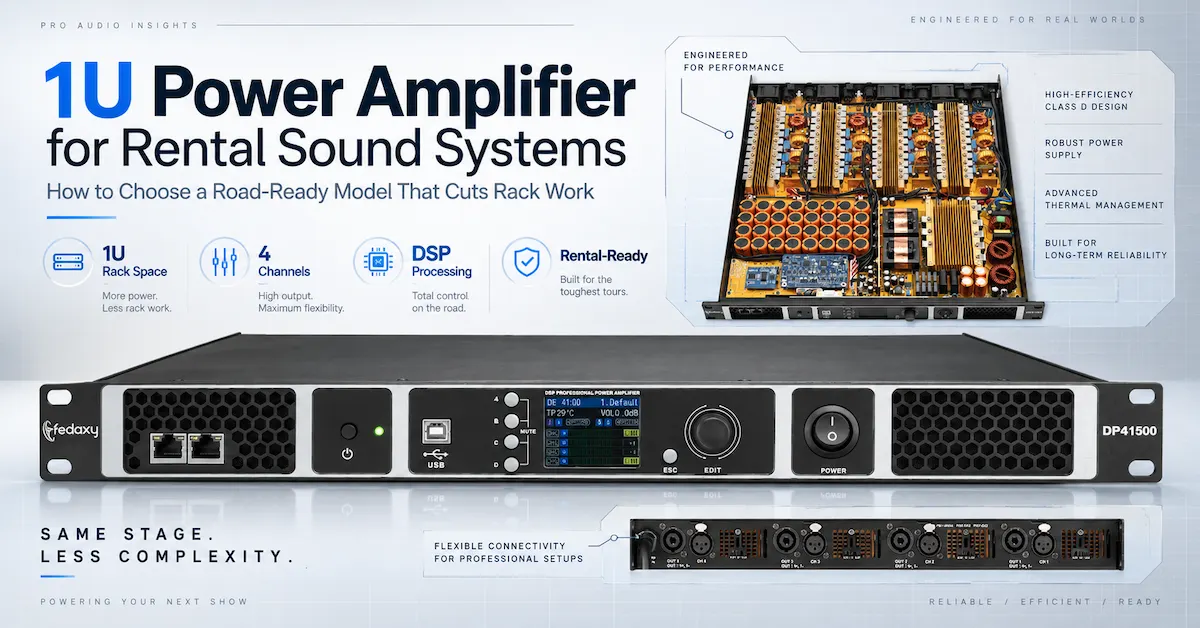
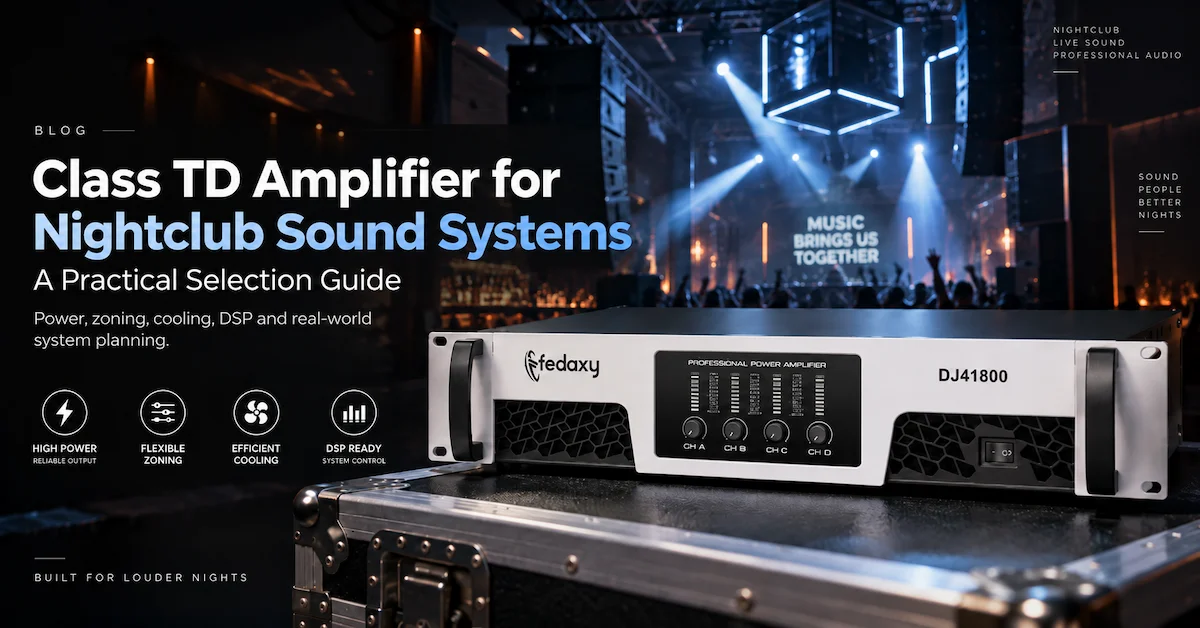
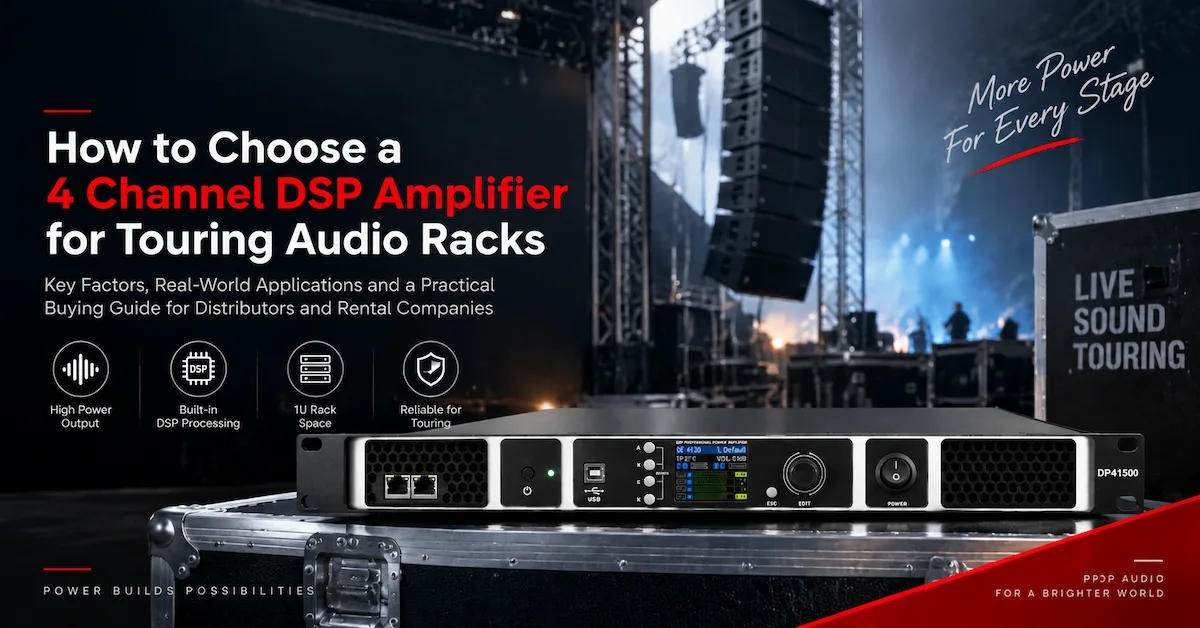
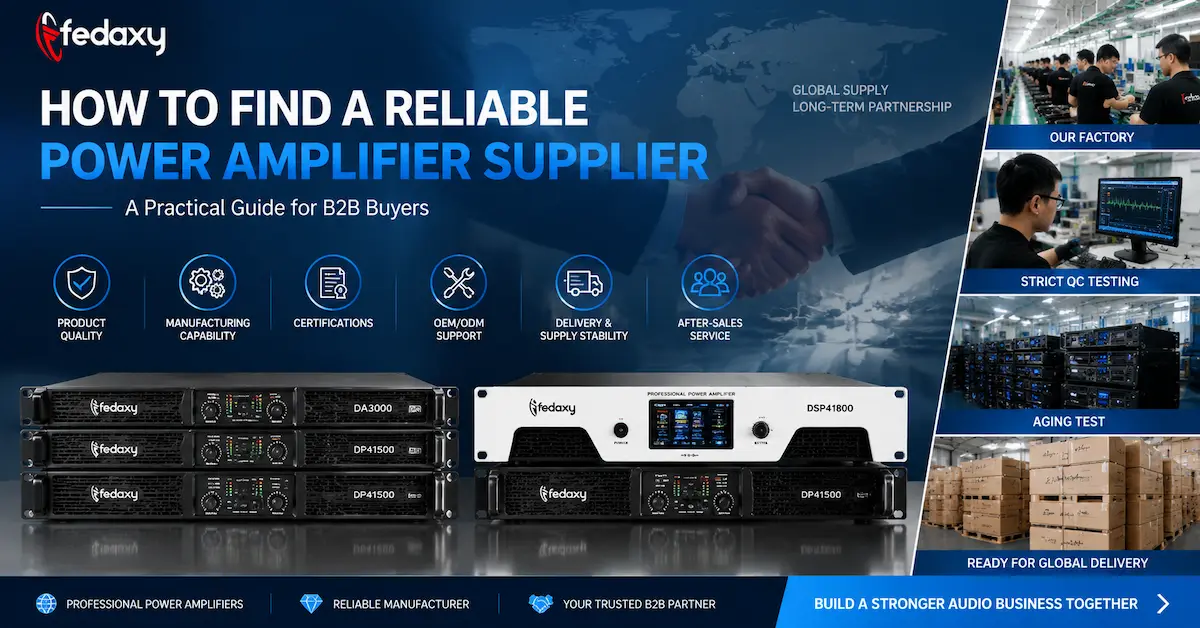
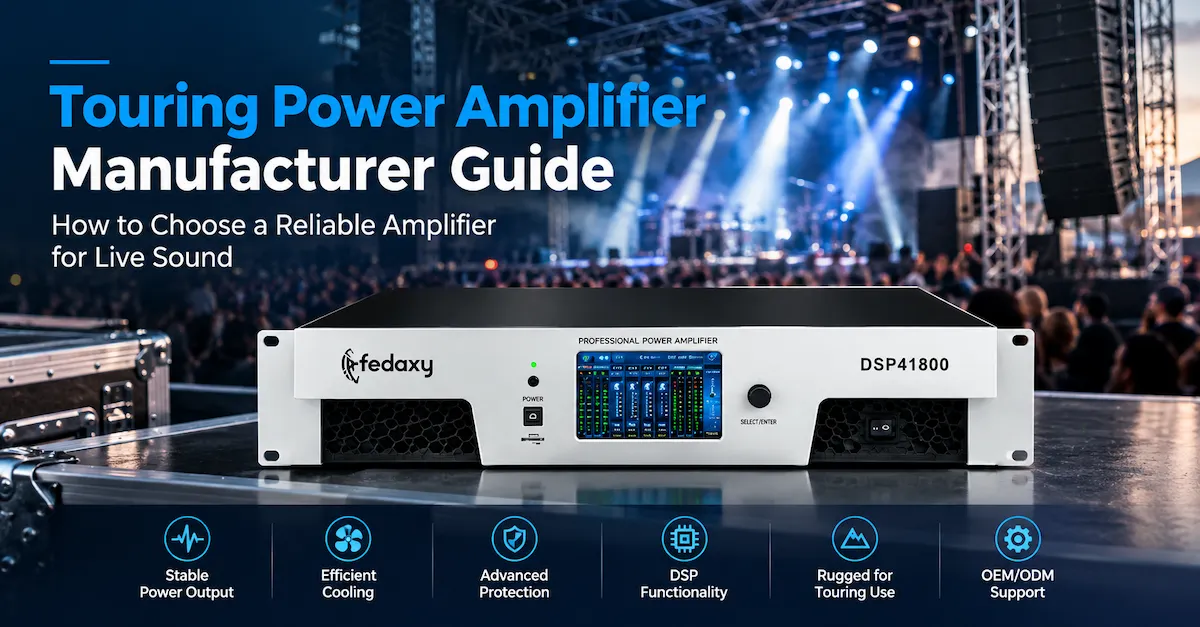
Fedaxy provides professional amplifier solutions based on Class D, Class TD, Class H, Class AB and DSP technologies for demanding professional audio applications.
Explore Fedaxy’s professional power amplifier products.
What Makes Stadium Audio Amplification Different?
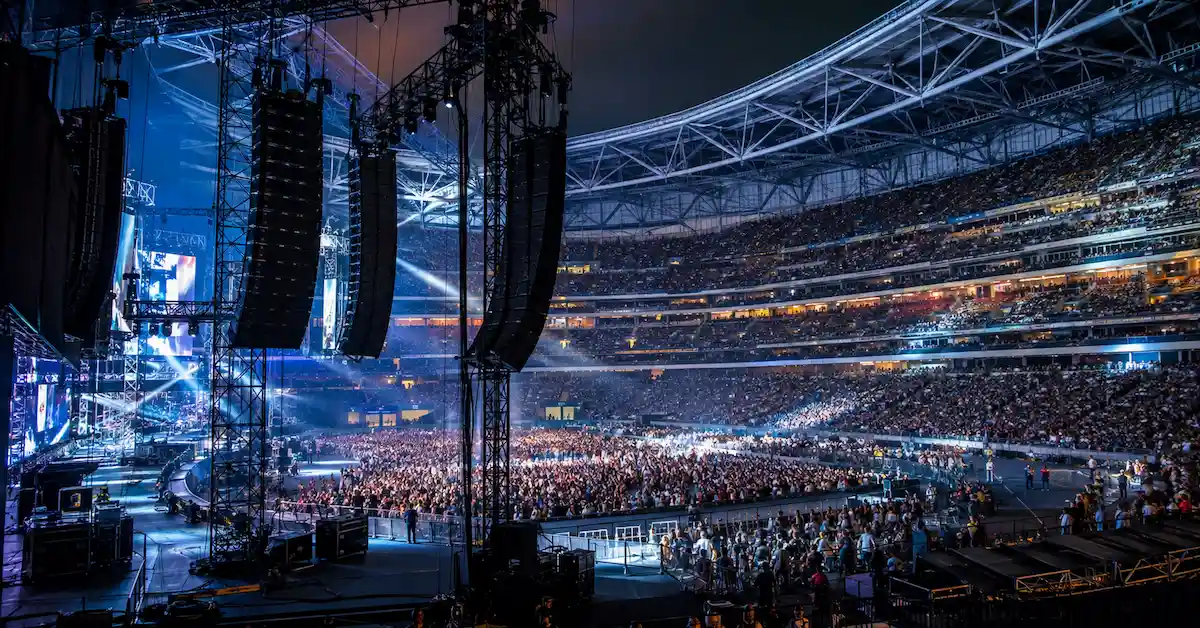
Stadium audio systems are designed to provide uniform sound coverage across large areas.
A typical stadium may include:
- spectator seating areas
- VIP zones
- entrances and public areas
- announcement systems
- performance areas
- emergency communication zones
The amplifier system must work together with:
- line array speakers
- distributed loudspeaker systems
- digital signal processors
- network audio systems
- control platforms
Because of these requirements, professional stadium projects usually need amplifiers with:
- high output capability
- multiple channels
- flexible configuration
- stable low-impedance operation
- advanced protection
- long-term reliability
A high power amplifier is therefore an important part of the entire audio system architecture rather than an isolated component.
How to Choose a High Power Amplifier for Stadium Sound Systems
Selecting an amplifier for a stadium project requires evaluating several technical factors.
The correct choice depends on:
- speaker system design
- required sound pressure level
- venue size
- operating environment
- channel requirements
- impedance configuration
- DSP requirements
Match Amplifier Power With Loudspeaker Requirements
One of the most common mistakes in large audio projects is selecting amplifiers only by maximum wattage.
A proper match requires understanding:
- speaker continuous power rating
- RMS power requirements
- peak power capability
- nominal impedance
- recommended amplifier range
The amplifier should provide sufficient headroom for dynamic audio signals while avoiding unnecessary stress on loudspeakers.
A correctly matched system improves:
- sound clarity
- reliability
- speaker protection
- operational stability
Understand Impedance Requirements
Professional stadium systems often involve multiple loudspeakers connected to amplifier channels.
Common operating loads include:
| Impedance | Typical Application | Main Consideration |
|---|---|---|
| 8Ω | Individual speaker systems | Lower current demand |
| 4Ω | Common professional configurations | Balanced power and efficiency |
| 2Ω | High-density speaker configurations | Requires stronger current capability |
A high power amplifier for stadium sound systems must be specifically designed for the intended impedance.
Lower impedance operation requires:
- stronger power supply design
- improved thermal management
- reliable protection circuits
Buyers should always confirm continuous operating capability rather than relying only on peak specifications.
Why Class D Amplifiers Are Common in Stadium Applications
Modern large venue audio systems increasingly use Class D amplifier technology because of its efficiency and compact design.
High Power Density
Stadium projects often require many amplifier channels.
Traditional amplifier systems may require large equipment racks and significant power consumption.
Class D amplifiers can provide:
- high output power
- compact chassis design
- reduced rack space
- lower transportation weight
This makes them suitable for:
- stadium installations
- touring systems
- large event productions
- professional rental applications
Efficient Thermal Performance
Large audio systems may operate for many hours continuously.
Heat management becomes a critical factor.
High-efficiency Class D designs can help reduce:
- heat generation
- cooling requirements
- energy consumption
- rack temperature pressure
However, amplifier efficiency should always be evaluated together with cooling design and operating conditions.
Lightweight System Integration
For touring stadium events, equipment transportation is an important consideration.
Lower amplifier weight can improve:
- installation efficiency
- transportation costs
- rack mobility
- deployment speed
DSP Functions in Stadium Power Amplifier Systems
Modern stadium audio projects often require precise signal management.
DSP-enabled amplifiers can provide functions including:
- equalization
- crossover control
- delay adjustment
- limiter configuration
- signal routing
- speaker protection
Why DSP Matters for Large Venues
Large venues often have different acoustic conditions across areas.
For example:
- field area
- upper seating sections
- covered areas
- open-air zones
DSP allows engineers to optimize different speaker zones and improve overall system consistency.
Integrated DSP vs External Processing
Both approaches can be suitable depending on project requirements.
| Solution | Advantage |
|---|---|
| DSP amplifier | Simplified system integration and fewer devices |
| External processor | Greater flexibility for complex systems |
The choice depends on system architecture, control requirements and installation design.
Channel Configuration for Stadium Amplifier Systems
Large venues usually require multiple amplifier channels because different speaker sections need independent control.
Common configurations include:
| Configuration | Application |
|---|---|
| 2-channel amplifier | Smaller zones and basic systems |
| 4-channel amplifier | Multi-zone stadium systems |
| Multi-channel amplifier racks | Large venues and complex installations |
Multi-channel amplifiers can help reduce:
- rack space
- cable complexity
- equipment quantity
For large projects, system designers should consider the balance between channel density, power requirements and maintenance convenience.
Important Specifications Before Purchasing a Stadium Amplifier
Before selecting a high power amplifier, professional buyers should review several specifications.
Output Power
Check power ratings at the actual operating impedance.
Important information includes:
- watts per channel
- impedance rating
- number of channels driven
- continuous output capability
Signal-to-Noise Ratio
A higher signal-to-noise ratio helps maintain cleaner audio performance.
This is particularly important in large venues where multiple audio components are connected.
Total Harmonic Distortion
THD indicates the amount of harmonic distortion introduced by the amplifier.
Lower distortion can help maintain:
- clearer vocals
- accurate music reproduction
- professional audio quality
However, specifications should always be compared under similar test conditions.
Damping Factor
Damping factor relates to amplifier control over loudspeaker movement.
It can influence low-frequency performance, especially in systems using large speakers or subwoofer sections.
Protection Features
Professional stadium amplifiers should include protection functions such as:
- over-temperature protection
- short circuit protection
- over-current protection
- DC protection
- voltage protection
Protection systems help improve reliability during demanding operating conditions.
Thermal Management for Stadium Sound Systems
Large venues often require amplifiers to operate for extended periods.
Thermal design should consider:
- equipment rack airflow
- ambient temperature
- continuous output level
- installation environment
A reliable amplifier design should include:
- effective cooling structure
- temperature monitoring
- protection control
- stable operation under load
For stadium projects, thermal reliability is just as important as output power.
Common Applications of High Power Stadium Amplifiers
Sports Stadiums
Applications include:
- football stadiums
- basketball arenas
- sports complexes
Requirements:
- wide sound coverage
- clear announcements
- reliable operation
Concert Venues
Concert applications require:
- high output capability
- dynamic performance
- stable operation
Outdoor Events
Outdoor productions require:
- powerful sound reinforcement
- flexible system setup
- reliable equipment performance
Large Worship and Public Venues
These applications often require:
- speech clarity
- distributed audio
- long operating hours
How to Evaluate a Professional Amplifier Manufacturer
For large venue projects, choosing the right supplier is as important as choosing the right amplifier model.
A reliable manufacturer should provide:
- engineering capability
- product consistency
- testing procedures
- technical support
- customization ability
Technical Experience
Manufacturers should understand:
- professional audio systems
- speaker matching
- impedance management
- thermal requirements
- DSP integration
Quality Control Process
Professional amplifier production should include:
- component inspection
- electrical testing
- power testing
- audio performance verification
- aging testing
Fedaxy supports professional amplifier manufacturing with quality control procedures designed for consistent performance in professional audio applications.
Learn more about Fedaxy capabilities through the About Us page.
OEM and Custom High Power Amplifier Solutions
Some stadium projects require customized amplifier solutions.
OEM/ODM requirements may include:
- specific power configurations
- custom branding
- special connectors
- voltage requirements
- DSP presets
- private label products
A professional manufacturer can help brands and integrators develop products according to project requirements.
For customized amplifier solutions, buyers can contact Fedaxy with project specifications.
Stadium Amplifier Selection Checklist
Before purchasing, confirm:
| Item | What to Check |
|---|---|
| Application | Stadium, concert, outdoor or installation |
| Speaker system | Model and configuration |
| Power requirement | RMS and continuous output |
| Impedance | 8Ω, 4Ω or 2Ω operation |
| Channels | Required amplifier channels |
| DSP | Processing requirements |
| Cooling | Installation environment |
| Protection | Safety functions |
| Testing | Quality verification |
| Support | Technical service |
This information helps manufacturers recommend suitable amplifier solutions instead of selecting products based only on advertised power ratings.
FAQ
What type of amplifier is suitable for stadium sound systems?
Professional stadium sound systems typically require high power amplifiers with stable output, multiple channels, reliable cooling and advanced signal processing capabilities.
How much power does a stadium audio system need?
Power requirements depend on venue size, speaker configuration, required sound pressure level and system design. There is no single wattage suitable for every stadium.
Are Class D amplifiers suitable for stadium applications?
Yes. Class D amplifiers are widely used in professional large-scale audio systems because of their efficiency, compact design and high power density.
Why is DSP important for stadium sound systems?
DSP helps engineers optimize equalization, crossover, delay and protection settings across different venue areas.
Should stadium amplifiers operate at 2Ω?
2Ω operation can improve channel utilization, but it requires amplifiers specifically designed for higher current demand and thermal stress.
How do I match a power amplifier with line array speakers?
Match the amplifier based on speaker power rating, impedance, number of cabinets, required headroom and manufacturer recommendations.
What quality tests should stadium amplifiers pass?
Professional amplifiers should undergo electrical testing, power testing, thermal testing, protection testing and aging verification.
Can high power stadium amplifiers be customized?
Yes. Professional manufacturers can provide OEM/ODM options including configuration, branding, DSP functions and product design adjustments.
Conclusion
Selecting the right high power amplifier for stadium sound systems requires a complete evaluation of power capability, impedance matching, DSP functions, thermal performance and long-term reliability.
For stadiums, arenas, concerts and large venue projects, the amplifier must deliver stable performance under demanding conditions while integrating effectively with the complete sound system.
A reliable amplifier manufacturer should provide:
- professional engineering support
- advanced amplifier technologies
- strict quality control
- flexible customization
- long-term technical cooperation
Fedaxy provides professional amplifier solutions based on Class D, Class TD, Class H, Class AB and DSP technologies for global audio applications.
For stadium audio projects, OEM requirements or custom amplifier solutions, visit Fedaxy Contact Us to discuss your requirements.