How to Choose a Professional Power Amplifier Manufacturer
Selecting a professional power amplifier manufacturer is an important decision for audio brands, distributors, system integrators and project contractors.
A reliable manufacturer does more than provide amplifier products. The right partner should offer:
- professional audio engineering capability
- stable manufacturing processes
- strict quality control
- product customization support
- technical assistance
- long-term supply cooperation
For companies developing professional audio solutions, choosing the wrong supplier can create risks including inconsistent quality, delayed projects, limited customization and insufficient technical support.
A qualified amplifier manufacturer helps customers transform audio requirements into reliable products for live sound, touring, commercial installation and large-scale audio projects.
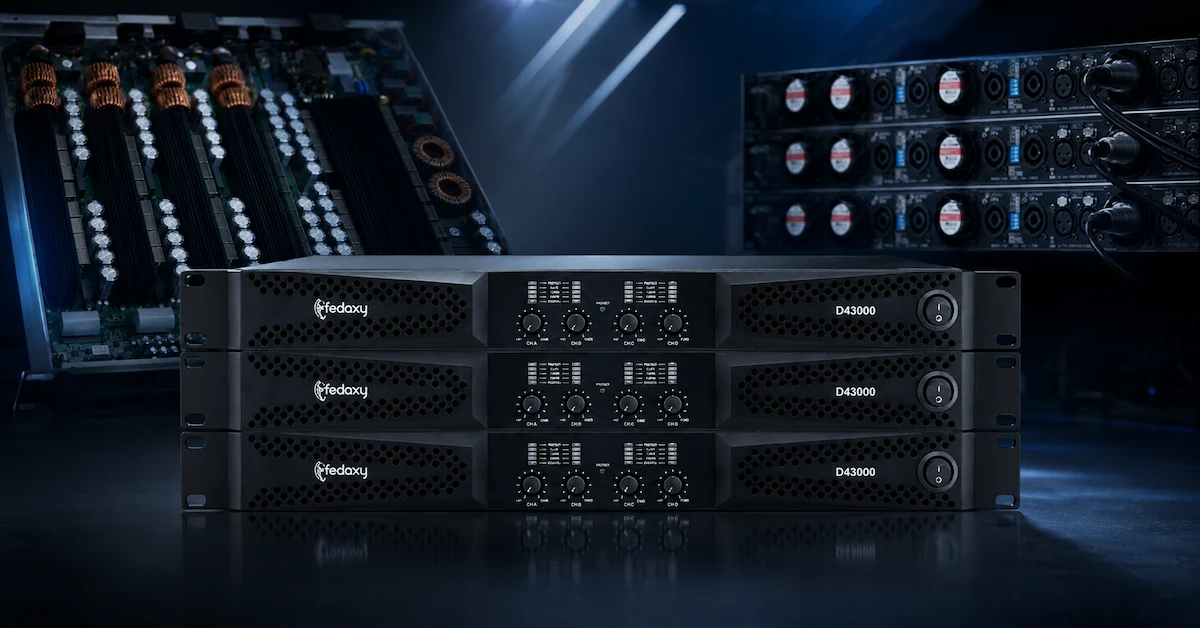
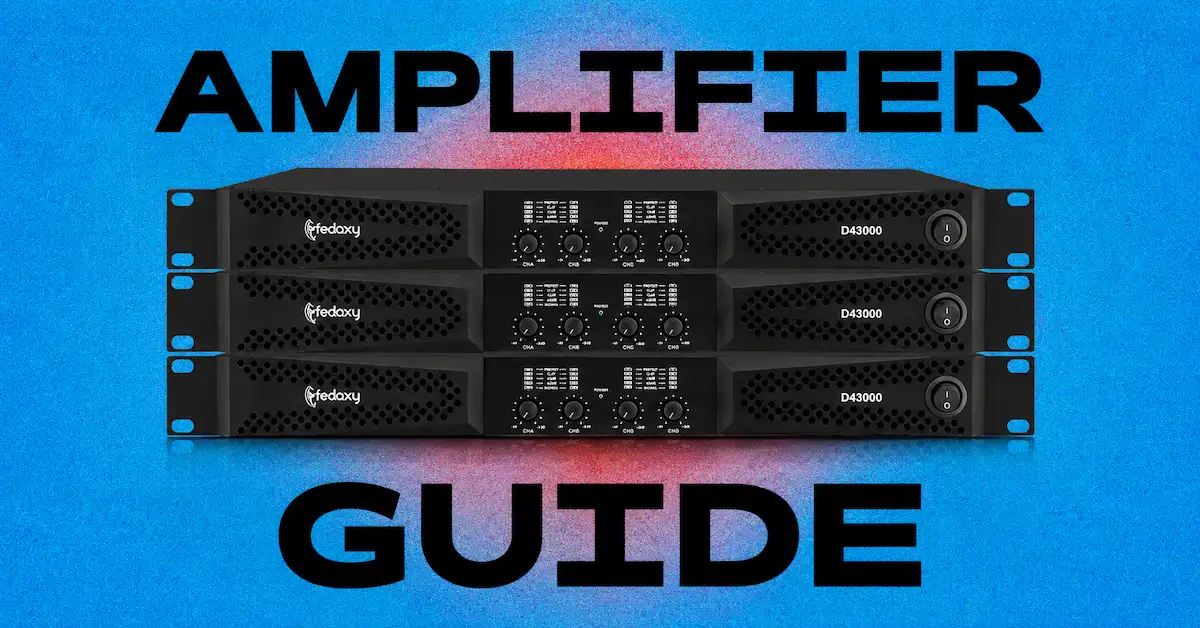
Fedaxy provides professional amplifier solutions based on Class D, Class TD, Class H, Class AB and DSP technologies for global audio companies and professional sound applications.
Explore Fedaxy’s professional power amplifier products.
Why Choosing the Right Power Amplifier Manufacturer Matters
Professional audio systems operate in demanding environments.
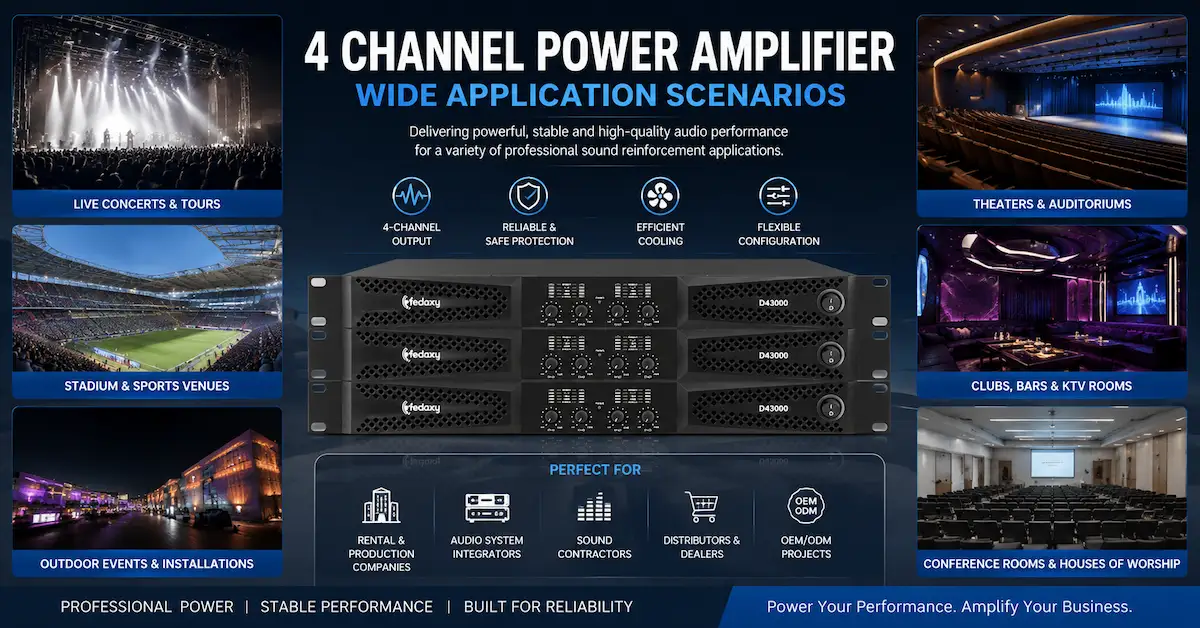
Amplifiers used in concerts, stadiums, theaters, entertainment venues and commercial projects must provide:
- stable output performance
- accurate signal reproduction
- reliable long-term operation
- efficient thermal management
- suitable protection functions
A manufacturer with professional audio experience understands that amplifier selection depends on more than output power.
The supplier should understand:
- speaker requirements
- impedance matching
- application environment
- system configuration
- installation conditions
Working with an experienced manufacturer reduces product risks and improves the reliability of the final audio system.
Key Factors When Choosing a Professional Power Amplifier Manufacturer
Evaluate Professional Audio Industry Experience
The first factor to consider is whether the manufacturer understands professional audio applications.
A capable amplifier manufacturer should have experience with:
- live sound systems
- touring audio
- stadium applications
- theaters
- KTV systems
- commercial audio installations
Professional audio products require different considerations compared with consumer electronics.
A manufacturer should understand:
- high output requirements
- continuous operating conditions
- system integration challenges
- reliability expectations
An experienced supplier can provide more suitable product recommendations based on actual applications.
Check Engineering and Product Development Capability
A professional power amplifier manufacturer should have strong engineering capability behind its products.
Important engineering areas include:
Amplifier Circuit Design
The amplifier architecture affects:
- output performance
- efficiency
- reliability
- operating stability
Manufacturers should understand different amplifier platforms and their application advantages.
Power Supply Design
The power supply directly influences:
- output capability
- dynamic response
- system stability
High-performance professional amplifiers require power systems designed for demanding audio environments.
Thermal Management Design
Professional amplifiers often operate at high output levels for extended periods.
Effective thermal management helps maintain:
- stable operation
- component lifespan
- performance consistency
DSP and Control Integration
Modern audio systems increasingly require digital control functions.
Manufacturers with DSP capability can support:
- EQ adjustment
- crossover settings
- delay control
- limiter configuration
- system optimization
Review the Manufacturer’s Product Technology Range
A reliable manufacturer should provide suitable amplifier solutions for different applications.
Fedaxy offers professional amplifier platforms including:
Class D Power Amplifier
Class D amplifiers are widely used in modern professional audio systems.
Key advantages include:
- high efficiency
- compact design
- lower heat generation
- high power density
Typical applications:
- touring systems
- line arrays
- commercial installations
- rental audio systems
Class TD Power Amplifier
Class TD technology is suitable for applications requiring strong output capability and reliable performance.
Common applications include:
- concerts
- stadium sound systems
- large venues
- professional live sound
DSP Power Amplifier
DSP amplifiers combine amplification with digital signal processing.
They provide advantages such as:
- simplified system setup
- flexible audio control
- improved speaker protection
- easier system adjustment
DSP solutions are valuable for:
- system integrators
- commercial projects
- professional installations
Class H and Class AB Amplifier Solutions
Different applications may require different amplifier architectures.
Class H and Class AB technologies continue to be used in professional audio environments where specific performance characteristics are required.
A manufacturer with multiple amplifier technologies can provide more flexible solutions for different customer requirements.
Verify Manufacturing Capability and Production Process
A professional power amplifier manufacturer should have a structured manufacturing process.
Important areas include:
Component Management
Manufacturers should control:
- electronic components
- PCB materials
- power devices
- connectors
Reliable component management helps maintain product consistency.
Assembly Process
Professional production should include:
- accurate assembly procedures
- production inspection
- functional verification
Testing Procedures
Amplifier testing should include:
- output power testing
- audio performance testing
- protection testing
- thermal testing
Manufacturing capability directly affects product reliability and long-term performance.
Evaluate Quality Control and Reliability Testing
Quality control is one of the most important factors when selecting an amplifier supplier.
Professional buyers should evaluate whether the manufacturer performs:
Electrical Performance Testing
Testing may include:
- output power
- distortion performance
- signal quality
- protection functions
Thermal and Aging Testing
Long-term operation tests help verify:
- temperature stability
- continuous operation capability
- product reliability
Final Inspection
Before shipment, manufacturers should confirm:
- product appearance
- functional performance
- packaging condition
For professional audio brands, quality control is directly connected to customer satisfaction and brand reputation.
Learn more about Fedaxy manufacturing capability through the About Us page.
Consider OEM and Customization Capability
Many audio companies require more than standard amplifier models.
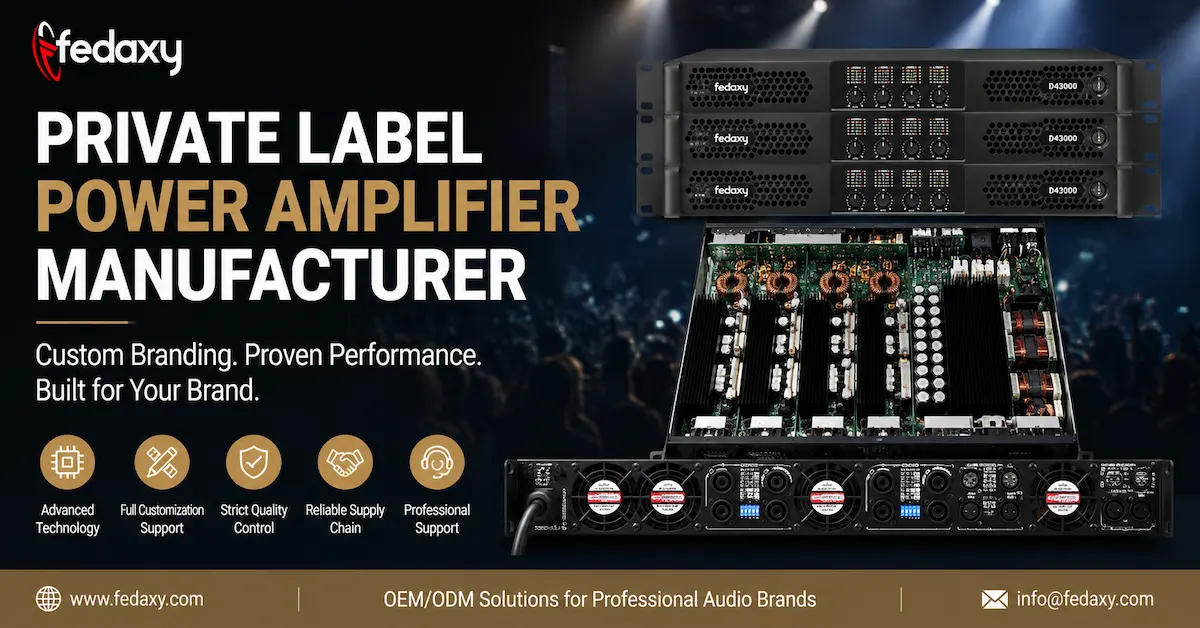
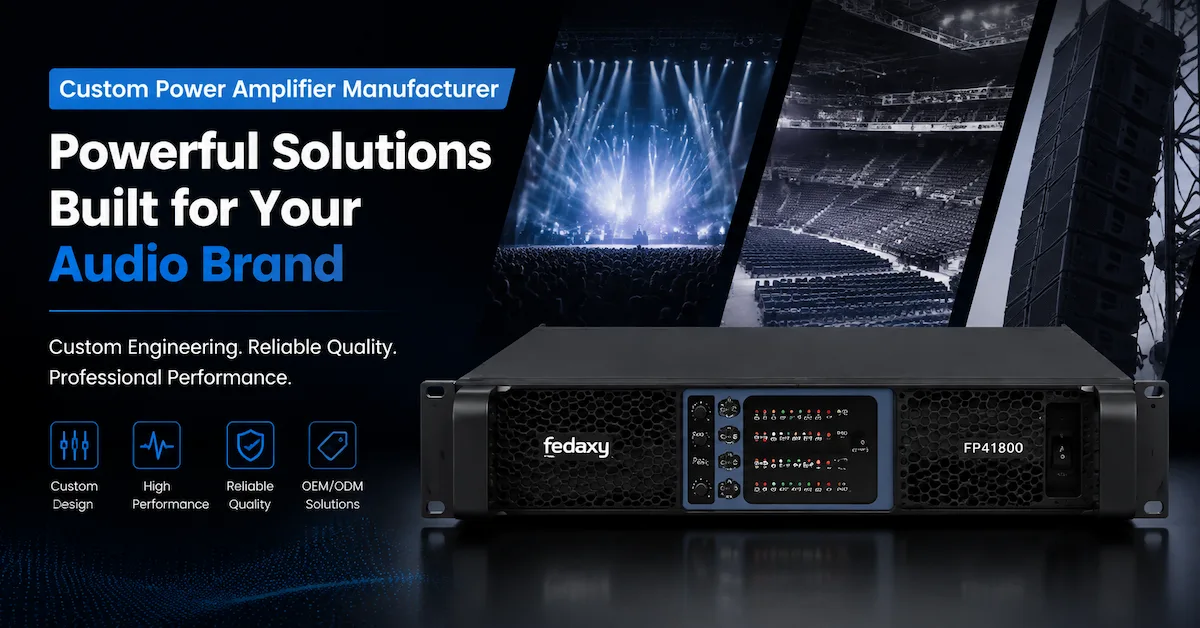
A professional manufacturer should support OEM and ODM projects.
Customization options may include:
- product appearance
- logo branding
- front panel design
- power configuration
- channel configuration
- DSP settings
- connectors
- packaging
This allows brands and distributors to create differentiated products for their target markets.
Why OEM Capability Matters
For audio brands, OEM cooperation can help:
- reduce product development investment
- create unique product lines
- improve market competitiveness
- build long-term supply relationships
A manufacturer with engineering and production experience can provide better support throughout the product lifecycle.
Compare Technical Specifications Before Selecting a Manufacturer
Specifications are important, but they should be evaluated correctly.
Professional buyers should review:
| Specification | Why It Matters |
|---|---|
| Output Power | Determines system driving capability |
| Impedance Support | Ensures compatibility with speakers |
| THD | Indicates distortion performance |
| Signal-to-Noise Ratio | Affects audio clarity |
| Damping Factor | Relates to speaker control |
| Cooling Design | Influences long-term stability |
| Protection Functions | Improves system reliability |
A reliable manufacturer should provide clear and consistent technical information.
Understand the Manufacturer’s Application Experience
A good amplifier supplier should understand where the products are used.
Live Sound Applications
Requirements:
- high output capability
- reliable operation
- flexible configuration
Stadium and Large Venue Systems
Requirements:
- powerful output
- stable continuous operation
- efficient thermal management
Theater and Performance Venues
Requirements:
- low noise
- accurate sound reproduction
- system flexibility
Commercial Audio Projects
Requirements:
- reliability
- easy integration
- long-term support
Application experience helps manufacturers recommend suitable amplifier solutions.
Questions to Ask Before Choosing a Power Amplifier Manufacturer
Before cooperation, professional buyers should ask:
Does the manufacturer provide engineering support?
Technical support is important for:
- product selection
- customization
- system matching
Can the manufacturer support OEM or ODM projects?
Confirm available customization options, including:
- product design
- branding
- specifications
- packaging
What quality tests are performed?
Ask about:
- performance testing
- aging testing
- reliability verification
Does the manufacturer understand professional audio applications?
Experience with real projects helps avoid product selection problems.
Can the supplier provide long-term support?
A reliable partner should support:
- future orders
- technical communication
- product improvement
- after-sales requirements
OEM and ODM Process With a Professional Amplifier Manufacturer
A professional development process usually includes:
Requirement Analysis
The manufacturer evaluates:
- application requirements
- technical specifications
- target market
- product objectives
Engineering Development
Engineers define:
- amplifier architecture
- configuration
- components
- mechanical design
Prototype Testing
Prototype verification checks:
- performance
- compatibility
- functionality
Production and Quality Verification
After approval:
- components are prepared
- products are assembled
- testing is completed
- final inspection is performed
This structured process helps ensure consistent product quality.
FAQ
What should I look for in a professional power amplifier manufacturer?
Look for engineering capability, manufacturing experience, quality control procedures, customization support and professional audio application knowledge.
Why is manufacturer experience important for amplifier projects?
Experienced manufacturers understand audio system requirements and can provide better solutions for different applications.
What technologies should a professional amplifier manufacturer provide?
A capable manufacturer may provide Class D, Class TD, Class H, Class AB and DSP amplifier solutions depending on project requirements.
Can amplifier manufacturers provide OEM customization?
Yes. OEM customization may include branding, appearance, configuration, DSP functions and packaging.
How do I verify amplifier quality before purchasing?
Review testing procedures, product specifications, quality control systems and reliability verification methods.
What applications require professional power amplifiers?
Professional amplifiers are commonly used in live sound, stadiums, theaters, touring systems, KTV and commercial audio projects.
Is the highest wattage amplifier always the best choice?
No. The correct amplifier depends on speaker matching, impedance, application requirements and system design.
How can I start an OEM amplifier project?
Provide product requirements, application details, technical specifications and customization expectations to the manufacturer.
Conclusion
Choosing the right professional power amplifier manufacturer requires evaluating more than product specifications.
A reliable partner should provide:
- professional engineering capability
- advanced amplifier technologies
- stable manufacturing processes
- strict quality control
- OEM and ODM support
- long-term cooperation
Fedaxy supports global audio brands, distributors and system integrators with professional amplifier solutions based on Class D, Class TD, Class H, Class AB and DSP technologies.
By combining technical experience with manufacturing capability, Fedaxy helps customers develop reliable amplifier products for live sound, stadiums, commercial audio and professional installation projects.
For professional power amplifier solutions, OEM development or customized audio projects, visit Fedaxy Contact Us to discuss your requirements.