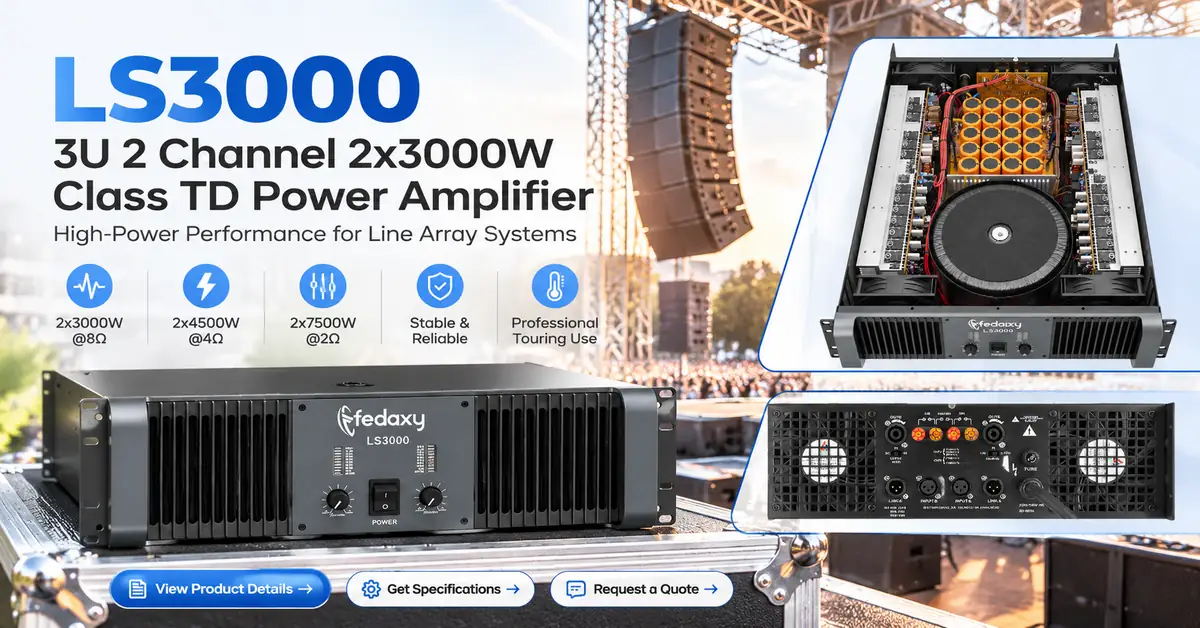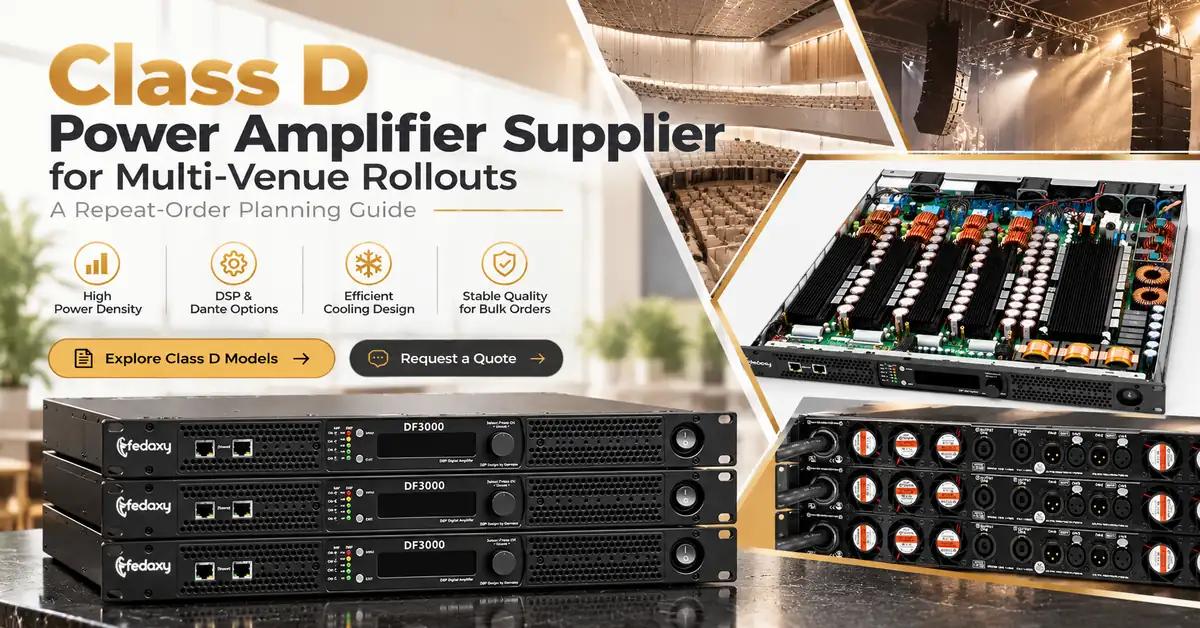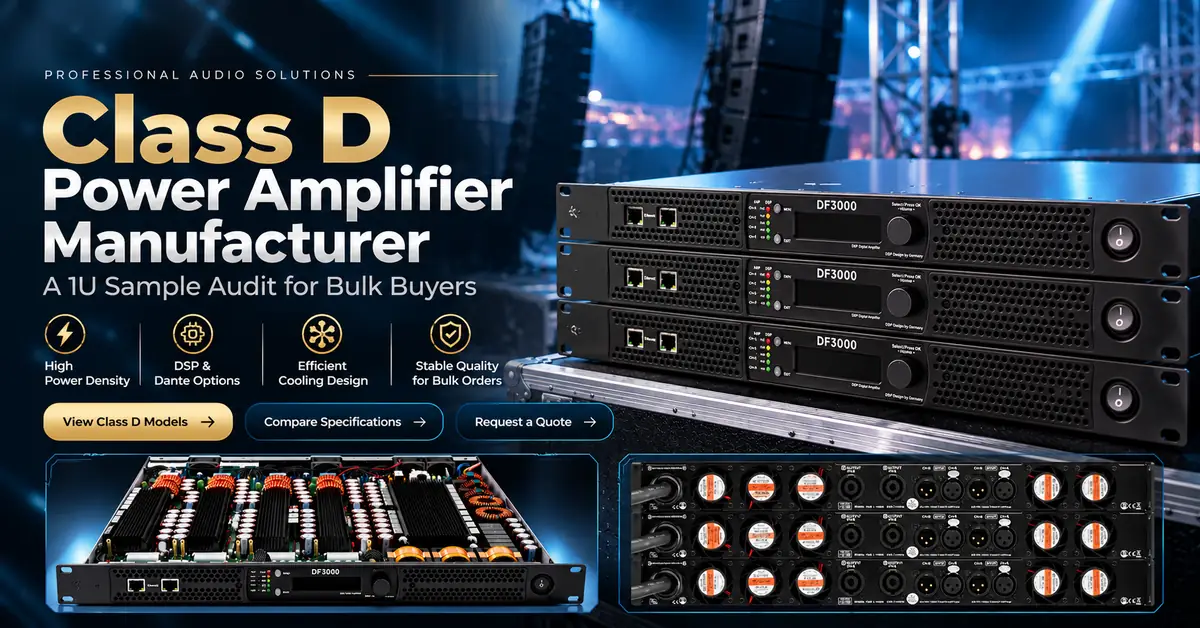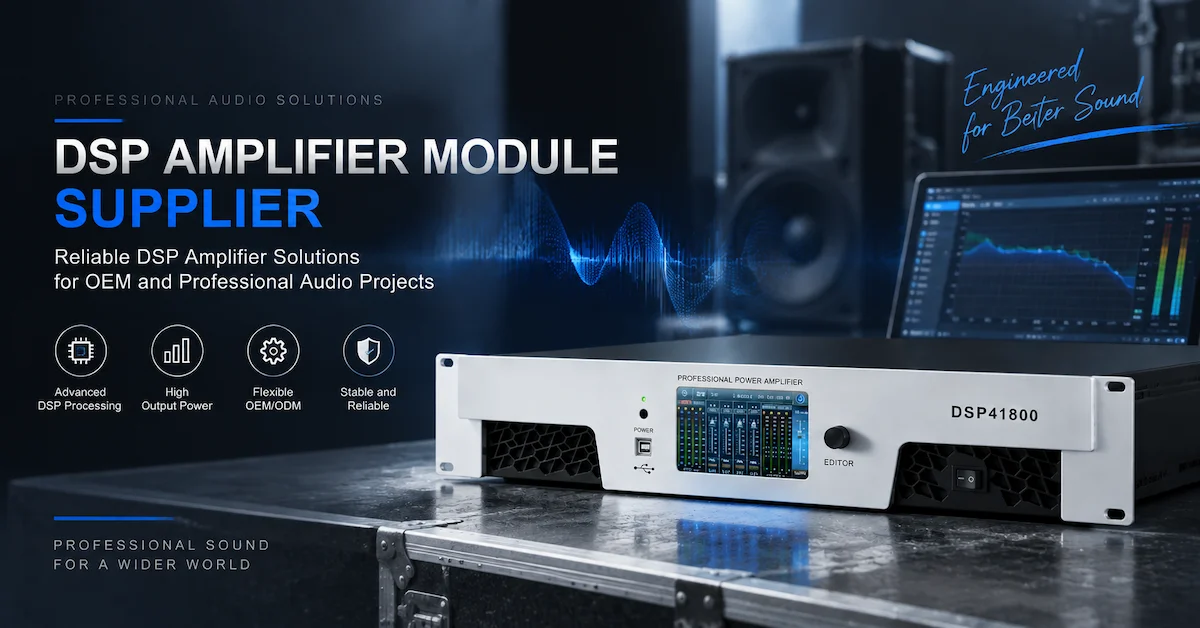
Live sound systems require amplifiers that can deliver stable power, accurate signal reproduction and reliable performance under demanding conditions.
For audio brands and professional sound companies, developing their own amplifier products requires more than purchasing standard models.
They need an OEM power amplifier manufacturer that can provide:
- product engineering
- custom design
- manufacturing capability
- quality control
- long-term supply support
A qualified OEM partner helps brands transform product ideas into professional audio solutions.
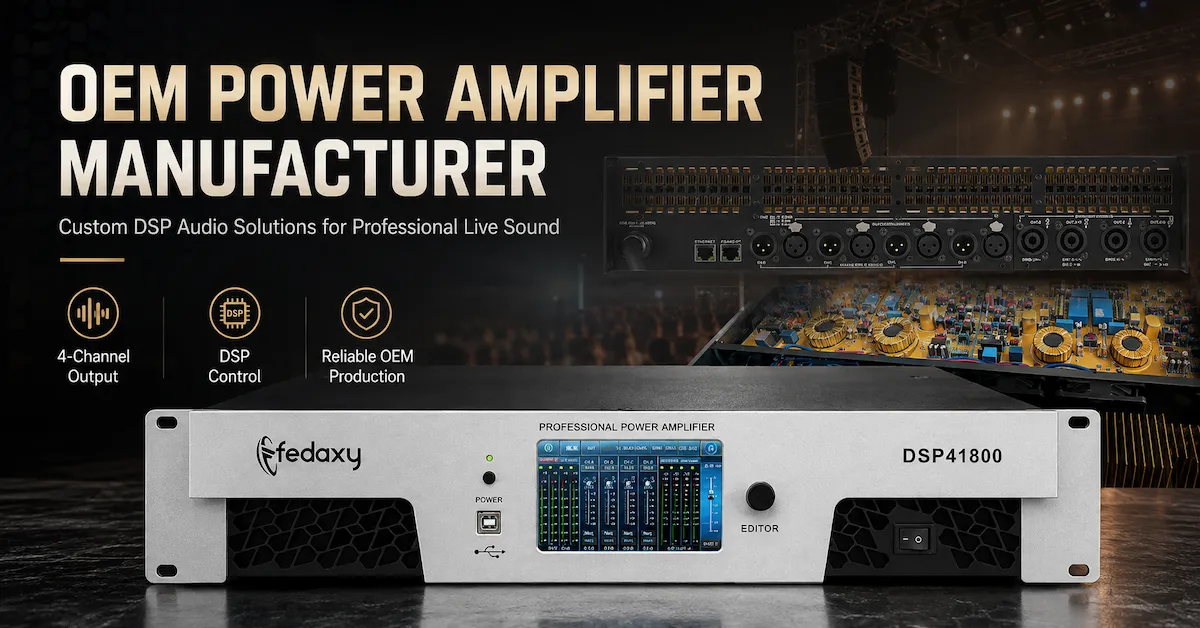
Fedaxy provides OEM amplifier solutions for global audio companies, offering professional Class D, Class TD, Class H and DSP amplifier technologies.
Explore Fedaxy’s professional amplifier products.
Why Live Sound Brands Need OEM Power Amplifier Manufacturers
Build Unique Amplifier Products
The professional audio market is highly competitive.
Brands often need products with unique advantages, including:
- customized appearance
- special configurations
- exclusive functions
- branded packaging
Working with an OEM manufacturer allows companies to create differentiated amplifier products instead of selling identical standard models.
This helps brands:
- strengthen market positioning
- improve customer recognition
- create product advantages
Reduce Product Development Investment
Developing an amplifier independently requires:
- engineering resources
- testing equipment
- production facilities
- supply chain management
OEM cooperation allows brands to use the manufacturer's experience and infrastructure while focusing on:
- marketing
- sales channels
- customer development
Improve Market Competitiveness
A professional OEM manufacturer can help brands respond faster to market demands.
Customization options may include:
- power levels
- channel configuration
- DSP functions
- connectors
- packaging
What Does an OEM Power Amplifier Manufacturer Provide?
A reliable OEM partner should support the complete product development process.
Product Engineering Support
Professional manufacturers provide technical support including:
- circuit design
- power system development
- thermal management
- mechanical structure design
Engineering capability directly affects:
- reliability
- efficiency
- product lifespan
Hardware Customization
OEM projects may require customization of:
- amplifier chassis
- front panel design
- input/output configuration
- internal components
This allows brands to create products that match their target markets.
DSP Function Customization
Modern live sound systems increasingly require digital control.
OEM DSP customization may include:
- EQ presets
- crossover settings
- delay adjustment
- limiter configuration
- system optimization
DSP functions help users achieve better sound performance in different venues.
Branding and Packaging Solutions
OEM services may also include:
- logo application
- product labels
- user manuals
- packaging design
This enables brands to launch complete products under their own identity.
Understanding Power Amplifier Requirements for Live Sound
Live sound applications have different requirements compared with home audio systems.
Professional systems require:
- high output capability
- stable operation
- efficient cooling
- reliable protection
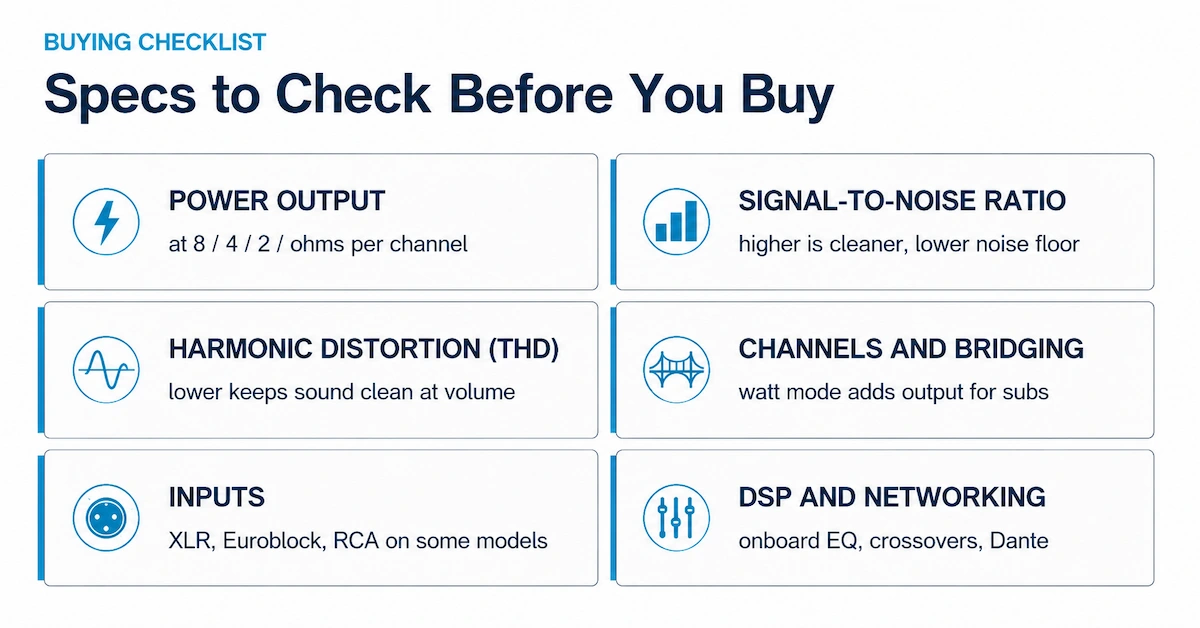
Output Power and Headroom
A suitable amplifier must match:
- speaker power rating
- impedance
- venue size
- target sound pressure level
Adequate headroom helps prevent:
- clipping
- signal distortion
- speaker damage
Impedance Matching
Professional amplifiers usually support different loads:
- 8Ω
- 4Ω
- 2Ω
Lower impedance requires:
- higher current capability
- stronger thermal management
A reliable OEM manufacturer should provide clear specifications for different operating conditions.
Channel Configuration
Different live sound projects require different channel numbers.
| Channel Configuration | Application |
|---|---|
| 2 Channel | Traditional stereo systems and small venues |
| 4 Channel | Touring racks and multi-zone systems |
| Multi-channel | Large installations and complex projects |
Choosing the Right Amplifier Technology for OEM Projects
Class D Power Amplifier
Class D amplifiers are widely used in modern live sound applications.
Advantages:
- high efficiency
- lightweight design
- low heat generation
- high power density
Suitable for:
- touring systems
- portable sound systems
- fixed installations
Class TD Power Amplifier
Class TD technology provides:
- high output power
- strong dynamic performance
- professional reliability
Suitable for:
- concerts
- stadium systems
- large-scale events
DSP Power Amplifier
DSP amplifiers provide advanced audio control.
Features include:
- EQ
- crossover
- delay
- limiter
- signal processing
DSP solutions are especially valuable for:
- touring companies
- system integrators
- commercial projects
How OEM Amplifier Manufacturers Develop Custom Products?
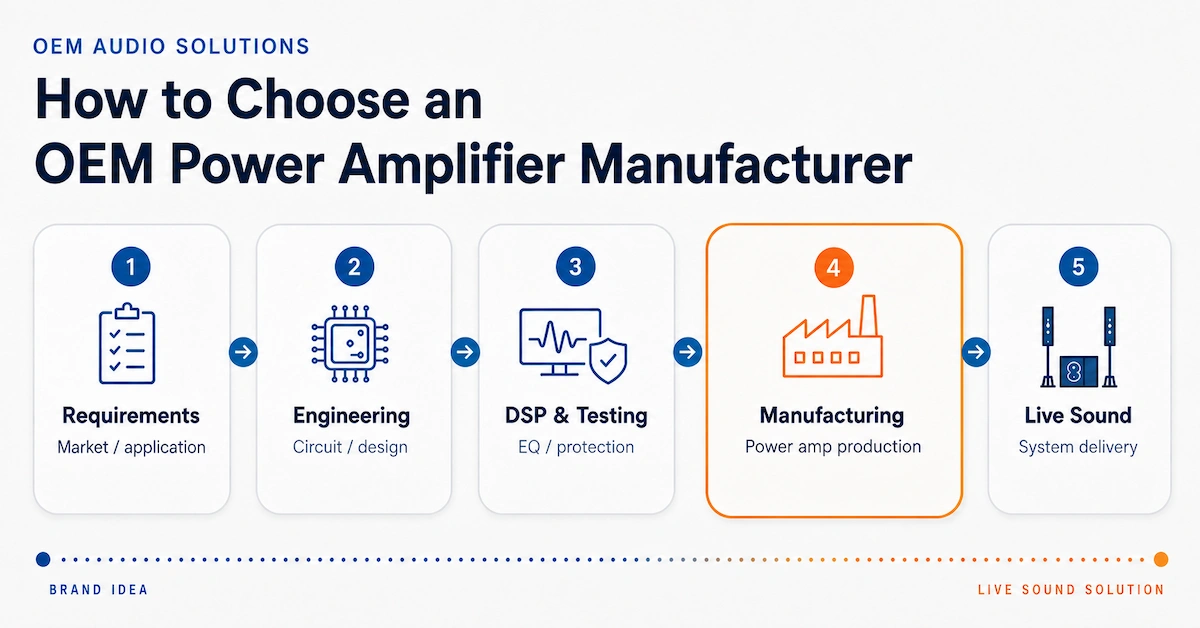
Requirement Analysis
The first stage includes:
- application requirements
- technical specifications
- target market
- production quantity
Engineering Design
Engineers evaluate:
- amplifier architecture
- power requirements
- cooling design
- component selection
Prototype Development
Prototype testing verifies:
- product performance
- appearance
- compatibility
Testing and Validation
Professional testing includes:
- output power testing
- audio performance testing
- thermal testing
- protection testing
Mass Production
After approval, production includes:
- component preparation
- assembly
- inspection
- final testing
Quality Control Process for OEM Power Amplifiers
Quality control is essential for OEM projects because products represent the customer's brand.
Component Inspection
Manufacturers inspect:
- electronic components
- PCB materials
- power devices
- connectors
Electrical Performance Testing
Testing includes:
- output power
- distortion
- signal quality
- protection functions
Thermal and Aging Testing
Aging tests verify:
- long-term stability
- cooling performance
- continuous operation reliability
Fedaxy applies quality control procedures to ensure consistent performance for professional audio applications.
Learn more about Fedaxy manufacturing capability through the About Us page.
OEM vs Standard Power Amplifier Purchasing Comparison
| Factor | OEM Manufacturing | Standard Purchasing |
|---|---|---|
| Product Design | Customized | Fixed models |
| Branding | Private label available | Supplier brand |
| Features | Flexible customization | Standard functions |
| Market Position | Differentiated products | General products |
| Development Support | Available | Limited |
| Best For | Brands and distributors | Immediate purchasing |
OEM Power Amplifier Specification Guide
| Item | Specification |
|---|---|
| Product Category | Professional Power Amplifier |
| OEM Service | Supported |
| Amplifier Technology | Class D / Class TD / DSP |
| Customization | Appearance, Configuration, DSP |
| Applications | Live Sound, Touring, Installation |
| Testing | Power Test, Audio Test, Aging Test |
| Target Customers | Brands, Distributors, Integrators |
FAQ
1. What is an OEM power amplifier manufacturer?
An OEM power amplifier manufacturer develops and produces customized amplifiers for brands and companies under their specifications.
2. Why do live sound brands choose OEM manufacturing?
OEM manufacturing allows brands to create unique products while reducing development costs.
3. Can Fedaxy customize amplifier products?
Yes. Fedaxy supports customized amplifier solutions including appearance, configuration and DSP functions.
4. What amplifier technologies are suitable for live sound?
Class D, Class TD and DSP amplifier solutions are commonly used for professional live sound applications.
5. What can be customized in an OEM amplifier?
Customization may include power output, channels, DSP settings, connectors and branding.
6. How long does OEM amplifier development take?
The timeline depends on product complexity, customization requirements and testing procedures.
7. What tests should OEM amplifiers pass?
Professional OEM products should pass power, audio, thermal and aging tests.
8. Does OEM manufacturing require large orders?
MOQ depends on product design, customization level and production requirements.
9. Can OEM manufacturers support private label brands?
Yes. OEM manufacturers can provide branded products with customized packaging and specifications.
10. How can I start an OEM amplifier project?
Contact Fedaxy with your product requirements, application details and expected quantity.
Conclusion: Partner With a Reliable OEM Power Amplifier Manufacturer
Choosing the right OEM power amplifier manufacturer is essential for brands that want to develop competitive professional audio products.
A qualified OEM partner should provide:
- engineering expertise
- flexible customization
- reliable manufacturing
- strict quality control
- long-term cooperation
Fedaxy supports global audio brands, distributors and professional sound companies with OEM amplifier solutions.
With advanced Class D, Class TD and DSP amplifier technologies, Fedaxy helps customers develop reliable products for live sound, touring and commercial audio applications.
For OEM projects, custom amplifier development or private label solutions, contact Fedaxy today.