What Is a DSP Power Amplifier?
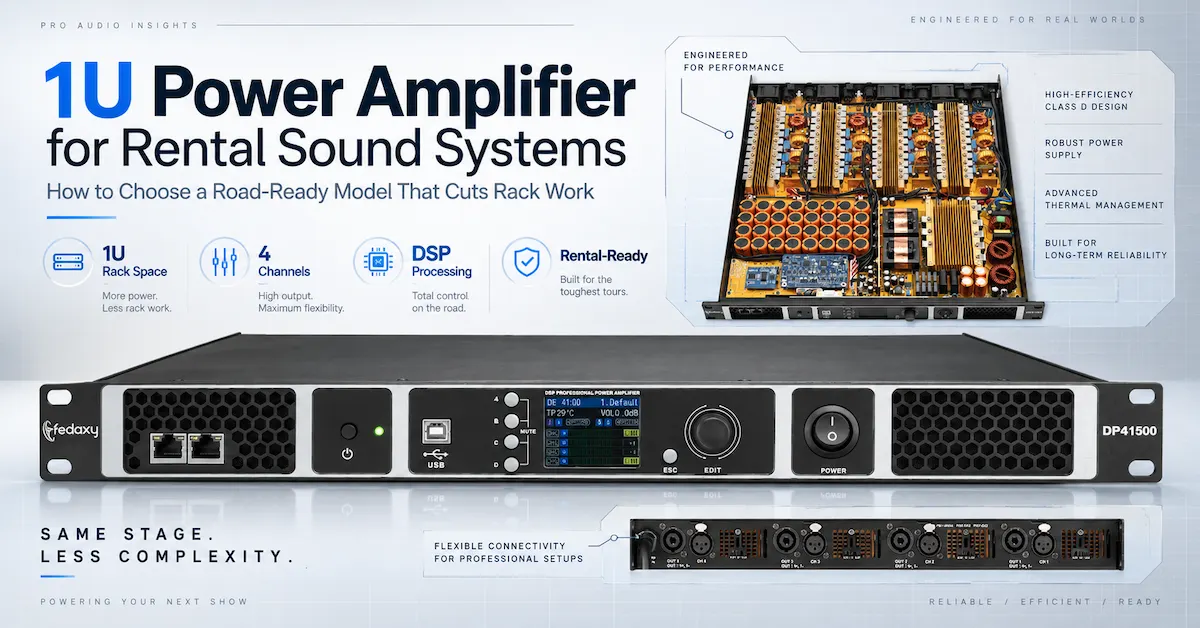
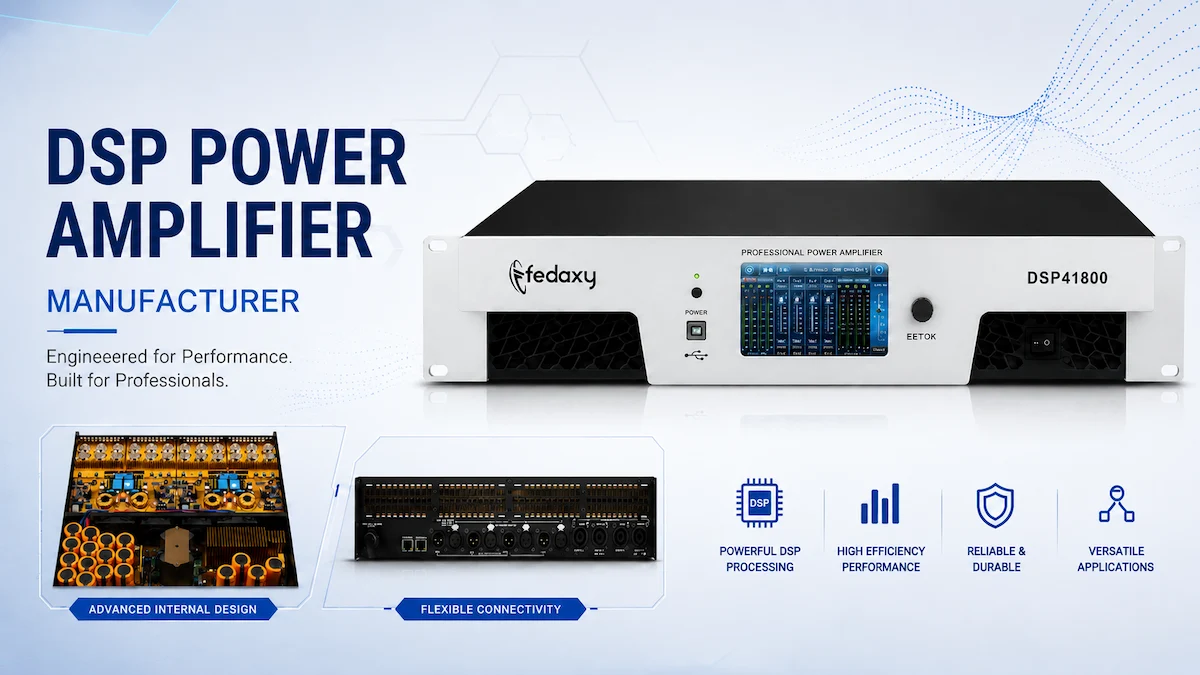
A DSP power amplifier combines a professional power amplification system with digital signal processing technology.
Unlike traditional power amplifiers that only increase audio output power, DSP amplifiers integrate advanced digital control functions to help engineers optimize sound performance, protect equipment and simplify system configuration.
A professional DSP power amplifier typically includes:
- power amplification module
- digital signal processor
- audio control functions
- protection system
- configuration software
For professional audio projects, DSP technology allows engineers to manage sound performance more accurately across different environments.
This makes DSP amplifiers widely used in:
- live sound systems
- touring audio
- stadium installations
- theaters
- commercial audio projects
- entertainment venues
Fedaxy provides professional amplifier solutions including Class D, Class TD and DSP amplifier technologies for global audio brands, distributors and system integrators.
Explore Fedaxy’s professional power amplifier products.
Why Professional Audio Systems Need DSP Power Amplifiers
Modern audio systems are becoming more complex.
Large venues and professional installations often require precise control over:
- multiple speaker zones
- frequency response
- signal timing
- speaker protection
- system optimization
Traditional amplifier systems usually require separate processors, crossovers and protection devices.
DSP power amplifiers combine these functions into one integrated solution.
Improve Audio System Optimization
DSP allows engineers to adjust system performance according to different environments.
Common optimization functions include:
- equalization adjustment
- crossover management
- delay alignment
- signal routing
- output protection
This helps sound engineers achieve more consistent performance across different venues.
For example, a stadium audio system may require delay adjustment between different speaker areas to maintain synchronized sound coverage.
Reduce System Complexity
A traditional professional audio system may require:
- mixer
- DSP processor
- crossover
- amplifier
- protection devices
A DSP power amplifier integrates several functions into one platform.
Benefits include:
- simplified installation
- reduced equipment requirements
- easier system management
- faster setup process
For system integrators, integrated DSP solutions can reduce project complexity.
Provide Better Speaker Protection
Professional audio systems often operate at high output levels.
DSP functions can help protect speakers through:
- limiter settings
- output monitoring
- protection algorithms
- controlled signal processing
This improves system reliability during long-term operation.
How to Choose a Reliable DSP Power Amplifier Manufacturer
Selecting a DSP amplifier supplier requires evaluating more than product specifications.
A qualified manufacturer should provide:
- amplifier engineering capability
- DSP development experience
- manufacturing capacity
- quality control procedures
- application knowledge
Evaluate DSP Development Capability
DSP performance depends on more than having a processor inside the amplifier.
A capable manufacturer should understand:
- DSP programming
- audio signal processing
- preset development
- system tuning requirements
- protection configuration
Professional DSP customization may include:
- EQ presets
- crossover settings
- delay parameters
- limiter configuration
- application-specific tuning
A manufacturer with DSP engineering capability can provide better solutions for different audio applications.
Check Amplifier Engineering Capability
DSP is only one part of the system.
The power amplification section directly affects:
- output performance
- efficiency
- reliability
- thermal stability
Important engineering areas include:
Power Supply Design
The power supply affects:
- output capability
- dynamic response
- operating stability
Thermal Management
Professional amplifiers may operate continuously under high loads.
Effective cooling design helps maintain:
- stable temperature
- component lifespan
- consistent performance
Protection Circuit Design
Protection systems help prevent damage caused by:
- overheating
- overload
- short circuits
- abnormal operation
Review DSP Amplifier Technology Platforms
Different applications require different amplifier architectures.
Class D DSP Power Amplifier
Class D technology is widely used in modern professional audio systems.
Advantages include:
- high efficiency
- compact design
- lower heat generation
- high power density
Class D DSP amplifiers are suitable for:
- touring systems
- line array systems
- rental audio
- commercial installations
Class TD DSP Power Amplifier
Class TD technology is commonly selected for demanding professional audio environments.
Advantages include:
- high output capability
- strong dynamic performance
- reliable operation
Applications include:
- concerts
- stadium systems
- large venues
- professional sound reinforcement
Class H and Class AB Solutions
Depending on application requirements, some projects may require different amplifier architectures.
A manufacturer with multiple technology platforms can provide more flexible product solutions.
Key DSP Functions Buyers Should Evaluate
When selecting a DSP power amplifier manufacturer, buyers should understand which functions are important for their applications.
| DSP Function | Application Value |
|---|---|
| EQ | Adjust frequency response and sound balance |
| Crossover | Manage speaker frequency ranges |
| Delay | Align sound in large spaces |
| Limiter | Protect speakers and amplifier output |
| Preset Management | Simplify system setup |
| Signal Routing | Improve system flexibility |
Not every project requires the same DSP configuration.
The correct solution depends on:
- speaker system
- venue size
- installation requirements
- operating environment
OEM and ODM DSP Power Amplifier Customization
Professional audio brands often require more than standard products.
A capable DSP power amplifier manufacturer should support customization options.
DSP Function Customization
Possible customization includes:
- EQ presets
- crossover parameters
- delay settings
- limiter configuration
- system tuning
This allows brands to create products optimized for specific applications.
Hardware Customization
Private label and OEM projects may include:
- logo branding
- front panel design
- chassis customization
- connector configuration
- power requirements
This helps brands create unique amplifier product lines.
Software and Control Customization
Some projects may require customized:
- control interfaces
- software settings
- preset libraries
- system management functions
These features can improve user experience and product differentiation.
Applications of DSP Power Amplifiers
DSP amplifiers are used across many professional audio environments.
Live Sound Systems
Live sound applications require:
- fast setup
- reliable performance
- flexible adjustment
DSP helps engineers optimize sound for different venues.
Stadium and Large Venue Audio
Large spaces require accurate system control.
DSP functions support:
- zone management
- delay alignment
- speaker optimization
These features are important for:
- stadiums
- arenas
- outdoor events
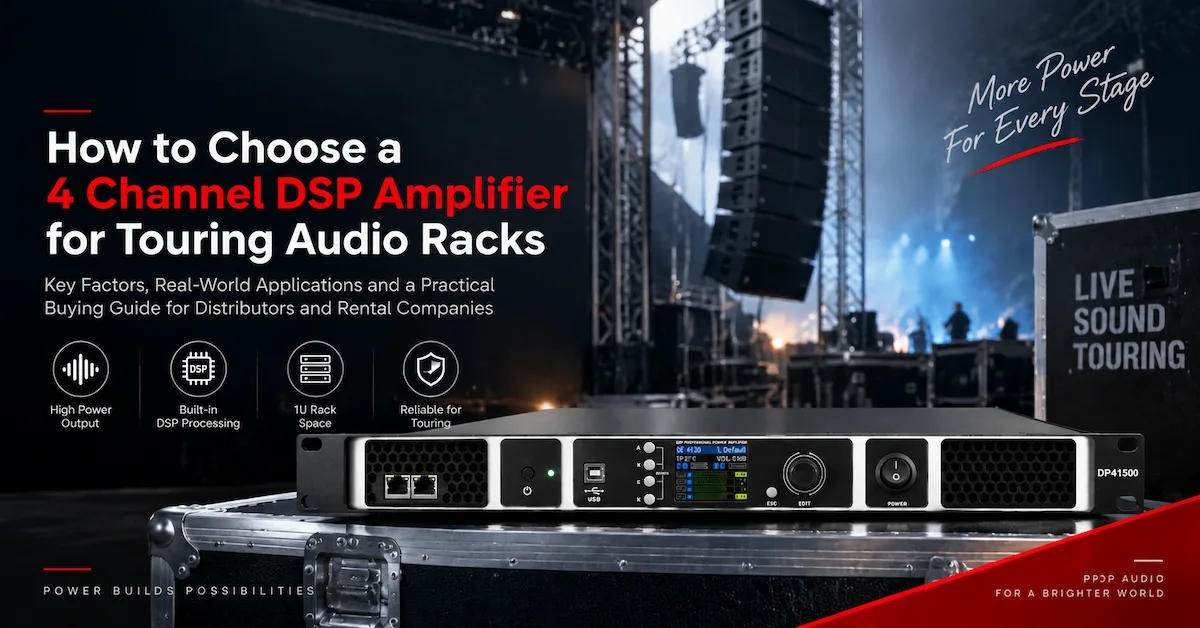
Touring Audio Systems
Touring companies need equipment that can be transported and deployed efficiently.
DSP amplifiers provide:
- compact system design
- repeatable settings
- faster configuration
Theater and Performance Venues
Theater applications require:
- accurate sound reproduction
- low noise
- precise system control
DSP helps maintain consistent audio quality.
Commercial Audio Installations
Commercial projects such as:
- hotels
- conference centers
- entertainment venues
often require stable operation and easy management.
DSP Power Amplifier Quality Control Process
A reliable manufacturer should have structured quality-control procedures.
Component Inspection
Manufacturers should check:
- electronic components
- PCB materials
- connectors
- power devices
Electrical Performance Testing
Testing may include:
- output power
- distortion
- signal quality
- protection functions
DSP Function Testing
DSP verification may include:
- parameter accuracy
- preset performance
- control response
- system stability
Thermal and Aging Testing
Long-term testing helps verify:
- continuous operation capability
- cooling performance
- product reliability
Fedaxy applies quality-control procedures to support consistent performance for professional audio applications.
Learn more about Fedaxy manufacturing capability through the About Us page.
DSP Power Amplifier Selection Checklist
Before selecting a manufacturer, professional buyers should confirm:
| Item | Consideration |
|---|---|
| Application | Live sound, stadium,commercial or touring |
| Output Power | Required system power |
| Channels | Number of amplifier channels |
| Impedance | Speaker compatibility |
| DSP Functions | Required processing features |
| Cooling Design | Long-term operation stability |
| Customization | Branding and configuration needs |
| Testing | Quality verification process |
A clear specification helps manufacturers recommend suitable solutions.
Why Choose Fedaxy as Your DSP Power Amplifier Manufacturer?
For professional audio brands and system integrators, choosing the right manufacturing partner is critical.
Fedaxy provides:
- professional amplifier engineering
- Class D and Class TD platforms
- DSP amplifier solutions
- OEM/ODM customization support
- quality-control processes
Fedaxy works with global audio companies to develop amplifier solutions for:
- live sound
- touring systems
- stadium applications
- commercial audio
- professional installations
With experience in professional amplifier technologies, Fedaxy helps customers create reliable audio products for different markets.
FAQ
What is a DSP power amplifier manufacturer?
A DSP power amplifier manufacturer designs and produces amplifiers that integrate digital signal processing functions with professional amplification systems.
What is the difference between a DSP amplifier and a normal amplifier?
A traditional amplifier mainly increases audio power, while a DSP amplifier also provides digital control functions such as EQ, crossover, delay and protection.
Why are DSP amplifiers used in professional audio systems?
DSP amplifiers help improve sound optimization, system flexibility and equipment protection in complex audio environments.
Can DSP power amplifiers be customized?
Yes. DSP customization may include presets, EQ settings, crossover parameters, limiter configuration and other application-specific functions.
Are Class D DSP amplifiers suitable for touring systems?
Yes. Class D DSP amplifiers are commonly used in touring systems because of their efficiency, compact size and high power density.
What applications require DSP power amplifiers?
Common applications include live sound, stadiums, theaters, commercial installations and professional entertainment systems.
How do I choose a DSP power amplifier manufacturer?
Evaluate DSP development capability, amplifier engineering experience, manufacturing quality, testing procedures and customization support.
Can Fedaxy provide OEM DSP amplifier solutions?
Fedaxy supports professional amplifier customization and OEM/ODM requirements according to project specifications.
What DSP functions are most important?
The most important functions depend on the application, but EQ, crossover, delay, limiter and preset management are commonly required.
What information should I provide when requesting a DSP amplifier project?
Provide application details, power requirements, channel configuration, DSP functions, target market and customization requirements.
Conclusion
Choosing the right DSP power amplifier manufacturer requires evaluating both digital processing capability and amplifier engineering expertise.
A reliable partner should provide:
- advanced DSP technology
- professional amplifier platforms
- customization capability
- manufacturing reliability
- strict quality control
Fedaxy provides professional DSP amplifier solutions based on Class D, Class TD and other professional amplifier technologies.
For audio brands, distributors and system integrators looking for customized DSP power amplifier solutions, Fedaxy supports product development from technical requirements to final production.
Explore Fedaxy’s DSP amplifier solutions or contact Fedaxy to discuss your professional audio project.